Enchanting Visuals: A Designer's Guide to Fairy House Clipart
Every creative project has a story to tell, but sometimes the narrative needs a tangible anchor—a visual cue that instantly transports the viewer into a specific world. For designers, marketers, and content creators working within the fantasy, children’s, or lifestyle sectors, finding the right imagery isn't just about aesthetics; it's about establishing a cohesive atmosphere. This is where Fairy House Clipart becomes an indispensable asset in your design toolkit. Far more than simple doodles, these illustrations represent a specific style of digital art that blends whimsy with intricate detail, offering a unique solution for projects that demand a touch of magic.
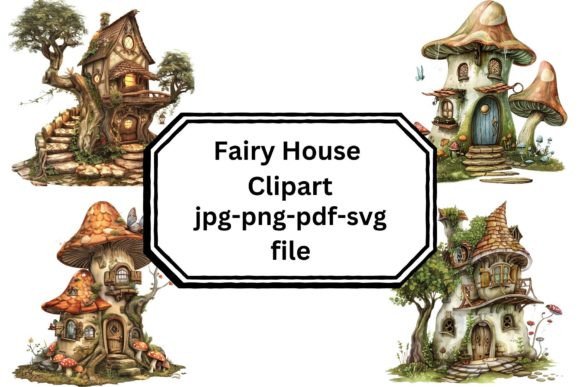
Understanding the visual language of these assets is crucial for effective implementation. Unlike generic stock photos, high-quality fairy house illustrations are defined by their "micro-architecture." You will typically notice features like crooked chimneys, tiny arched windows, and organic textures that mimic wood, stone, and moss. The personality of this clipart style is inherently inviting and nostalgic. It doesn't just represent a house; it suggests a habitat. The lines are often clean but organic, avoiding the harsh geometry of modern architecture in favor of curves and natural forms. This makes Fairy House Clipart particularly effective for projects aiming to evoke feelings of comfort, imagination, and wonder.
Strategic Applications: Beyond Children's Books
While the immediate application might seem to be children's book illustrations, the utility of this style extends much further into the professional creative space. As a designer or entrepreneur, you need to look at these assets through the lens of branding and user experience. The "fantasy" genre has expanded significantly, influencing everything from wedding stationery to wellness branding. If you are a small business owner selling handmade goods, organic teas, or artisanal crafts, these illustrations can serve as a powerful visual metaphor for "handmade" and "natural."
Consider the following scenarios where this style excels:
- Packaging Design: For products that want to emphasize natural ingredients or a magical user experience, a small fairy house vignette on a label can differentiate a product on a crowded shelf. It suggests that what is inside is special and crafted with care.
- Digital Marketing & Social Media: Content creators can use these illustrations as backgrounds for quotes, headers for blog posts about mindfulness or gardening, or as engaging stickers in Instagram Stories. They break the monotony of standard corporate graphics.
- Event Branding: From themed birthday parties to fantasy conventions, or even unique wedding invitations with an "enchanted forest" theme, these graphics provide a consistent visual identity that is easy to apply across print and digital mediums.
The Psychology of Whimsy in Brand Identity
When you integrate Fairy House Clipart into a brand identity, you are making a deliberate psychological choice. In a world dominated by flat design and minimalist sans-serif aesthetics, introducing detailed, organic illustrations signals a different set of values. It tells your audience that your brand values imagination, nature, and perhaps a slower pace of life.
This approach is particularly relevant for businesses targeting audiences who feel overwhelmed by technology. For example, a blogger writing about escapism or mental health could use these images to create a "safe space" visual environment. The intricate details of the doors and windows draw the eye in, encouraging the viewer to linger on the page. This is a subtle but effective way to increase engagement time. However, it is vital to maintain balance. If your text is dense, overly complex illustrations might compete for attention. The key is to use these assets to complement your message, not overshadow it.
Practical Workflow: Integrating Fantasy Elements
Adopting a new design asset requires more than just dropping an image onto a canvas. To maintain professionalism and visual hierarchy, you need a strategy for integration. Most high-quality clipart sets come in formats like PNG (with transparent backgrounds) or vector files (SVG/AI). Vectors are superior for branding because they can be scaled infinitely without losing quality, ensuring your fairy house looks just as sharp on a billboard as it does on a business card.
Here is a practical guide to evaluating and using these assets effectively:
- Evaluate the Art Style: Does the illustration style match your typography? A highly detailed, sketch-like fairy house pairs beautifully with a handwritten font or a classic serif font. If you pair it with a rigid, ultra-modern sans serif font, ensure there is enough visual breathing room so the styles don't clash awkwardly.
- Check for Versatility: Look for bundles that offer variety. You might need a close-up of a door for a favicon and a wide shot of a village for a website header. Good assets offer different compositions.
- Color Palette Adaptation: The best clipart allows for color customization or comes in neutral tones that can be tinted. Ensure the colors of the house match your existing brand palette. If your brand is "earthy," the illustration shouldn't look neon.
Typography Pairing and Visual Hierarchy
One of the most common mistakes in editorial design or web design is failing to harmonize imagery with type. When using Fairy House Clipart, you are introducing a strong thematic element. Your typography needs to support this theme without becoming illegible.
Avoid using overly decorative script fonts for body text, as the combination of detailed art and complex script can become visually noisy. Instead, use the clipart as a focal point and pair it with a highly legible display font for headlines and a clean sans serif font for the body copy. This creates a clear visual hierarchy. The illustration captures the emotion, the headline captures the attention, and the body text delivers the information. This structure ensures your design looks professional rather than cluttered.
Licensing and Professional Standards
Finally, a note on professionalism: always review the licensing of your design assets. Whether you are using them for personal hobby projects or commercial client work, understanding the terms is non-negotiable. Most premium clipart comes with a license that allows for commercial use, but there may be restrictions on print runs or resale of the raw files.
For entrepreneurs and small business owners, using properly licensed assets is a cornerstone of a credible brand identity. It protects you legally and ensures that you aren't using the same generic free images as your competitors. Investing in high-quality, unique Fairy House Clipart signals that you value originality and are willing to invest in your brand's presentation. By thoughtfully applying these enchanting illustrations, you transform a simple design into an immersive experience for your audience.