Charm of Vintage Wagon Wheels in Modern Design
There is a specific kind of texture that digital work often lacks. We spend so much time working with vector perfect lines and pristine gradients that our projects can sometimes feel sterile. If you are a designer, scrapbooker, or small business owner looking to inject some history and grit into your visuals, you likely understand the struggle of finding assets that feel authentic. The solution often lies in embracing the rustic aesthetic, and few elements capture that spirit quite like Vintage Wagon Wheels Transparent PNGs.
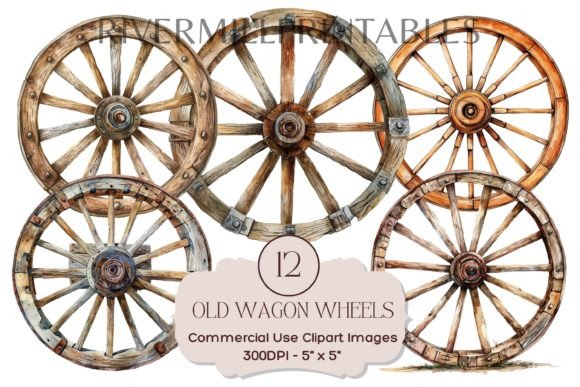
This particular set offers a collection of 12 high quality PNG images featuring distinct wagon wheel designs. At 300 DPI with transparent backgrounds, these are not just generic clip art. They are designed to be integrated directly into professional workflows, from complex photo manipulations to simple paper crafts. Because the backgrounds are already removed, you save the tedious hours usually spent on masking and selection, allowing you to focus on the creative application.
Understanding the Visual Character
Before incorporating any design asset into a project, it helps to understand its personality. A wagon wheel is not just a circle; it is a symbol of movement, the American West, pioneer spirit, and a bygone era of craftsmanship. The visual characteristics of these PNGs lean heavily into that heritage. You will likely notice the wood grain textures, the imperfect circles that suggest hand-carved construction, and the heavy contrast that comes from wrought iron bands against dried timber.
In the world of typography and design, we often talk about the "voice" of an element. These wheels speak a language of durability and nostalgia. They function much like a display font or a serif font with a lot of history. While a sans serif font might suggest modernity and efficiency, the wagon wheel suggests tradition. If your brand identity relies on storytelling, heritage, or organic materials, these assets act as a visual anchor. They ground the viewer, creating an immediate emotional connection to the past.
Strategic Applications for Creative Professionals
Knowing what the asset looks like is one thing; knowing how to use it effectively is another. The versatility of these transparent PNGs extends far beyond simple decoration. Here is how different professionals can leverage them.
For Brand Identity and Logo Design
For entrepreneurs in the food and beverage industry, particularly those focusing on farm-to-table dining, distilleries, or artisanal goods, a wagon wheel can be a powerful brand mark. It communicates authenticity without needing a single word of copy. When used in logo design, these wheels can serve as a background texture or a framing device for typography. Imagine a bold, vintage script font or handwritten font centered over a faded, semi-transparent wagon wheel. It creates a seal of quality, implying that the product is handcrafted and time-tested.
Editorial and Publishing Layouts
In editorial design, particularly for magazines, blogs, or book covers dealing with history, travel, or western fiction, visual hierarchy is key. You can use a high-contrast wagon wheel as a focal point to break up long blocks of text. Because these images are high resolution (300 DPI), they are suitable for print. A publisher could use them as chapter headers or full-page background accents behind pull quotes. The texture adds depth to the page, making the reading experience more tactile.
Packaging and Product Design
Packaging design requires elements that stand out on a shelf. A rustic wagon wheel graphic works exceptionally well for products like BBQ sauces, beef jerky, organic soaps, or even craft beer. The key here is integration. You wouldn't just slap the image on the label; you would use it to frame the product name. By adjusting the opacity or using a "multiply" blend mode, the wheel can merge with the paper texture of the label, creating a cohesive look that feels premium.
Digital Content and Social Media
Digital spaces are crowded. To stop the scroll, you need imagery that evokes an immediate feeling. For social media graphics, particularly on platforms like Instagram or Pinterest, these PNGs can be used to create cohesive "highlight" covers or recurring motifs in a feed. If you are a travel blogger writing about Route 66 or a history account discussing the Oregon Trail, these assets are invaluable. They help build a visual language that followers recognize instantly, aiding in brand consistency and audience engagement.
Scrapbooking and Paper Crafts
Let’s not forget the original use case. For hobbyists and crafters, the transparent nature of these files is a massive time saver. In digital scrapbooking, layering is everything. You can place these wheels behind photos to create a frame, or use them as embellishments on a vintage-themed layout. Because they are approximately 5" x 5", they are substantial enough to be a centerpiece but versatile enough to be resized smaller as icons or corner decorations.
Influence on Design Hierarchy and Readability
One of the most overlooked aspects of using strong visual elements like vintage graphics is how they affect the rest of your layout. A wagon wheel is a strong geometric shape. It draws the eye. This can be used to your advantage to guide the viewer’s attention.
However, you must be mindful of visual hierarchy. If you place a busy, high-contrast wheel behind a block of body text, you will destroy readability. The "noise" of the wood grain will compete with the letters. Instead, use these assets in areas where text is minimal—headers, logos, or standalone imagery. If you must place text over the wheel, use a bold, legible typeface and perhaps a slight drop shadow or a semi-transparent overlay box to separate the typography from the texture.
Furthermore, these assets influence brand perception. In an era of modern typography and flat design, using a textured, vintage asset signals that a brand cares about detail. It suggests a "slow design" approach, which can be very appealing to consumers tired of mass-produced, generic aesthetics. It adds a layer of professionalism that says, "We thought about this."
Practical Guidance for Integration
To get the most out of the Vintage Wagon Wheels Transparent PNGs, you need to treat them as serious design assets. Here are some practical tips for evaluation and implementation:
- Evaluate the Resolution: At 300 DPI and roughly 5x5 inches, these are print-ready. However, if you need to blow them up for a poster or a banner, check for pixelation. If you plan to use them for large-format printing, ensure you aren't stretching them beyond their limits.
- Check the Edges: Because they are PNGs with transparency, look closely at the edges. Sometimes, cutout images have a faint white or black fringe ("halo") around them. In professional software like Photoshop, you can use "Defringe" or "Remove White Matte" tools to clean this up for a seamless blend.
- Font Pairing Strategy: The style of the wheel dictates the style of the font. A rugged wagon wheel pairs best with other "rugged" typefaces. Think of a chunky slab serif font or a textured handwritten font. Avoid pairing it with ultra-thin, delicate sans serifs or overly formal scripts, as the contrast in "mood" will feel disjointed.
- Color Grading: The PNGs will come with their own natural coloring (likely browns, grays, and sepia tones). To make them fit your specific project palette, apply color overlays or use Hue/Saturation adjustments. You can turn the wheel into a monochromatic stamp that matches your brand colors perfectly.
- Commercial Usage: Always verify the license. If you are using these for a client's logo or a product you intend to sell, ensure the license permits commercial use. Most standard sets allow this, but it is the mark of a professional to always double-check the terms of the commercial font or asset license.
Conclusion: The Value of Authentic Texture
In a digital world, authenticity is currency. Using Vintage Wagon Wheels Transparent PNGs